Today, London is on the cusp of far-reaching changes around pedestrianisation in the capital’s centre, with the reopening of the iconic century-old pedestrianised diagonal Sicilian Avenue heralding wider changes. First built in 1910 by visionary architect R.J. Worley, the busy street (with its iconic pillared entryway bearing the name Sicilian Avenue) has blazed a trail for the benefits of pedestrianisation, running from the obvious (cleaner air and quieter streets) through to some rather unexpected benefits in terms of boosting business and tourism.
With a large part of Oxford Street set to be pedestrianised, the reopening of Sicilian Avenue with 70,000 square feet of offices above 17,500 feet of retail heralds a transformation of the inner city - and its contribution to the lives of people in the area and outside is already being recognised. Adam Harrison, Councillor for Bloomsbury ward, has said, “Since 1910, Sicilian Avenue has shown London how pedestrian-friendly areas can improve both the lives of residents and those who work and travel through them."
So what benefits can pedestrianisation bring? Here’s five unexpected ones…
1. Pedestrianisation Is Great for Business
There are 5.64 million small businesses in Britain, making up 99.2% of the business population. Since the pandemic, an office is often an unnecessary expense for these organisations that drive the engine of Britain’s economy - and pedestrianised streets form the perfect setting for business leaders who enjoy working (and lunching) in relaxed restaurants and cafes. A whopping 53% of business owners eat in a restaurant or cafe at lunch (as opposed to grabbing a sandwich from the supermarket). Separate research by TfL found that people on foot simply spend more - 40% a month more than car drivers, in fact.
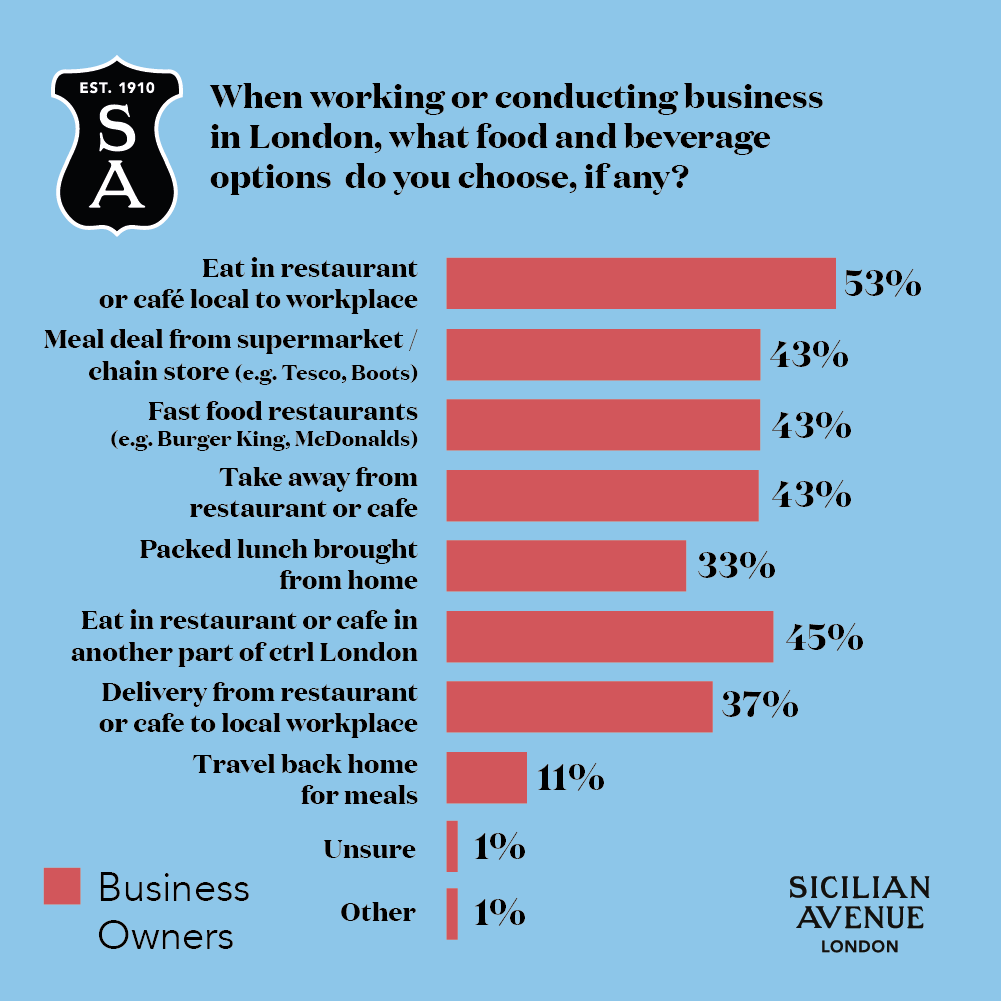 Sicilian Avenue Graph - When working or conducting business in London, what food or beverage options do you choose, if any? Biz owners
2. Sicilian Avenue Shows It’s Great for Visitors
For tourists and day trippers as well, it’s abundantly clear that pedestrianised streets are a draw. Around two-thirds of visitors to London (63%) say they are more likely to choose restaurants or cafes on pedestrianised streets - that rises to 67% among 16-24-year-olds and 65% among men. Visiting restaurants, in fact, is the most popular reason to visit central London (cited by 39% of respondents) ahead of shopping (37%) and museums and other cultural institutions (33%). Around the world, projects to pedestrianise large areas have successfully attracted both more visitors and more businesses to areas. Put simply, tourism and pedestrianisation go hand in hand.
3. Finding a Restaurant to Work from Home
Even with the pandemic a distant memory, British people are still working from home - and that goes double for micro businesses. British people work 1.8 days per week from home on average, more than anyone else in Europe, with 42.2% of us either working remotely or hybrid. On pedestrianised streets, cafés and restaurants become mobile offices for these remote workers: more than one in ten business owners (11%) say they enjoy working in restaurants and cafés, rising to 19% among micro businesses.
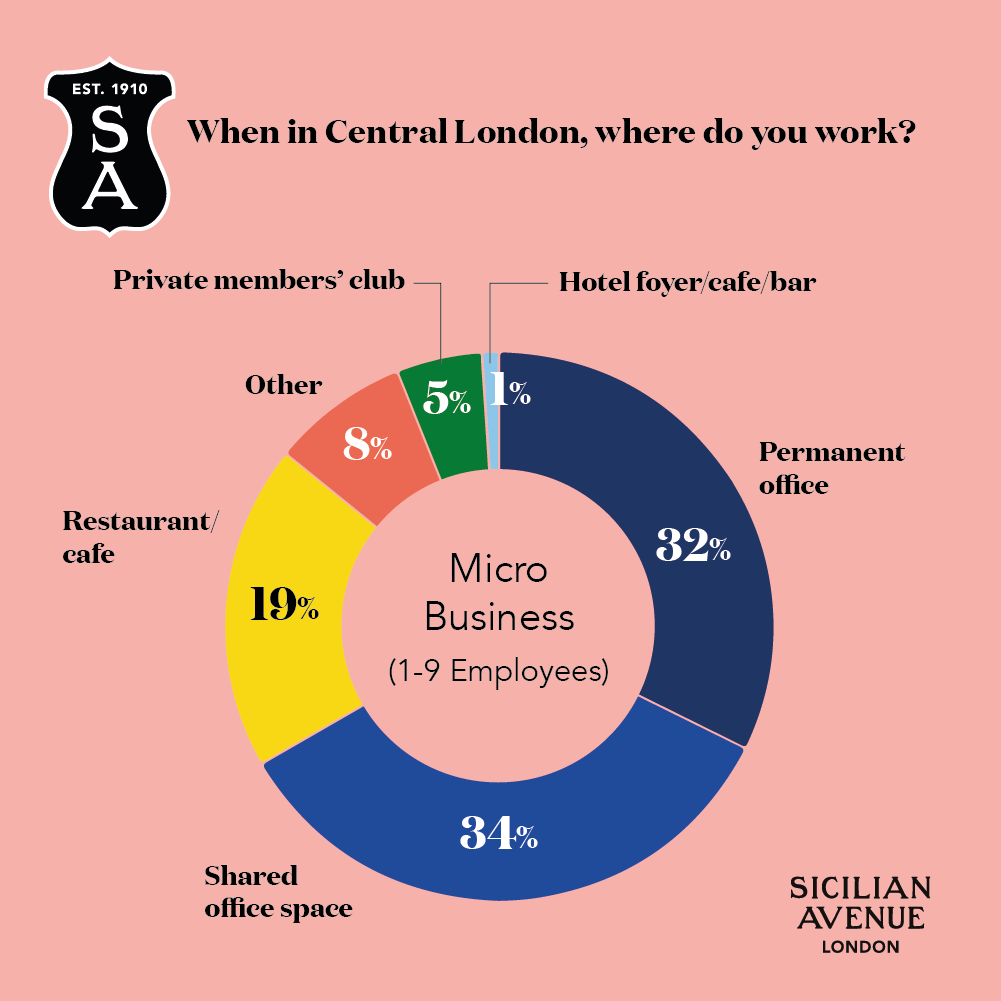 Sicilian Avenue Graph - When in central London, where do you work? Micro business
4. It’s Good for Physical and Mental Health
Sicilian Avenue showcases how pedestrianised streets urge shoppers out of their cars and onto the pavements and cobblestones, with proven health benefits. If every Londoner walked or cycled for just 20 minutes a day, the NHS would save £1.7 billion in treatment costs, including 18,800 fewer Londoners suffering from depression, according to research by London's Mayor Sadiq Khan. In research by Living Streets, 41% of people reported increased wellbeing after using outdoor spaces in London - while in Scotland, the number of deaths averted by people walking to work saved £600 million a year in treatment costs.
5. It Builds Communities
The car has not been a friend to Britain’s High Streets, meaning that people never stop to look around and really bond with an area. Research by Living Streets found that 56p of every £1 spent by community businesses remains in the local economy. In London Business Improvement Districts (BIDs), 90% of business leaders say that walking and cycling create vibrant areas.
The refurbished Sicilian Avenue offers 70,000 square feet of offices above 17,500 feet of retail, food, and beverage and lifestyle space. For more information about commercial lettings, please visit: https://sicilianavenue.com/commercial-opportunities