At the turn of the twentieth century, visions of the ‘city of the future’ revolved around the then-new motor car - but as we speed past the first quarter of the twenty-first, it’s clear that the city of the future will be filled with people walking. At the forefront of this development is the soon-to-reopen Sicilian Avenue in London, a poster child for the health and financial benefits of walking, which is helping to build its native Holborn as a ‘destination’, while its safe, pedestrianised streets encourage local workers to walk out of the office, sit down and enjoy a bite to eat in the fresh air.
What Does Walking Do To Your Body?
The historical pedestrianised street (proudly car-free since 1910, 63 years before Carnaby Street shed its motor vehicles), is a vision of London’s future, where the health and economic benefits of walking enrich London’s businesses and its population alike. Research conducted by London’s Mayor Sadiq Khan for his Transport Strategy (which aims for all Londoners to do at least 20 minutes of active travel a day by 2041) found that if every Londoner walked or cycled for just 20 minutes a day it would save the NHS £1.7 billion in treatment costs, including 19,200 fewer people suffering from dementia and an estimated 18,800 fewer Londoners suffering from depression.
Are There Health Benefits To Walking?
Spaces such as Sicilian Avenue, located in the heart of Bloomsbury and a six minute amble from The British Museum, have a vital part to play in driving towards the goal of healthier, happier streets. With its distinctive street sign (with columns, no less) welcoming visitors, it can help lure passers by into a bustling community taking in everyone from residents to office workers to business leaders. Research by Sicilian Avenue this year found that business leaders were more likely to eat in a restaurant or cafe local to their workplace (53%), even more than workers (46%), highlighting how health and prosperity go hand in hand.
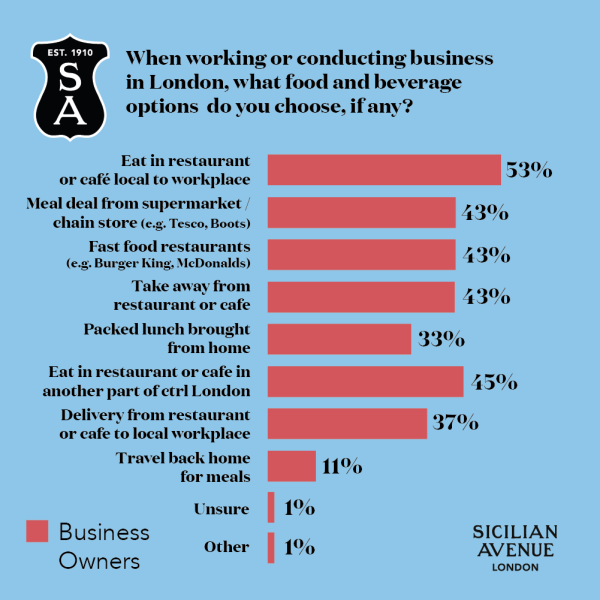 When working or conducting business in London, what food and beverage options do you choose, if any? Business owners
Business leaders agree. In Business Improvement Districts (BIDs), 90% of those surveyed say that cycling and walking create vibrant areas (with Sadiq Khan’s research finding that walking projects typically have a benefit cost ratio of 13:1 meaning that for every pound put in, the benefits are worth £13). The responses from BID’s highlight how positively businesses see walking in terms of business, with 95% believing that walking is important for business performance.
Separate research by TFL has found that people on foot spend 40% more in town centres than car drivers - meaning that streets like Sicilian Avenue can form a vanguard for boosting health, driving sales and creating a living, breathing community in the centre of London.