Pedestrianised shopping streets have a long history in London, with streets such as the iconic Mediterranean-styled Sicilian Avenue having graced the capital for more than a century with its iconic columns, playing host to retailers, restaurants and booksellers.
London’s pedestrianised streets appeared in the prosperous years at the end of the 19th and early 20th century, and the far-sighted visions of the architects of that era look set to be a vision of 21st century London’s future. For shoppers and retailers alike, the coming pedestrian era looks set to change the way Londoners buy.
Most importantly, Londoners themselves are clearly keen on the idea of car-free streets, with 63% saying they are more likely to choose a restaurant or cafe on a pedestrianised street, and 53% saying that pedestrianised streets are more pleasant, calm and serene.
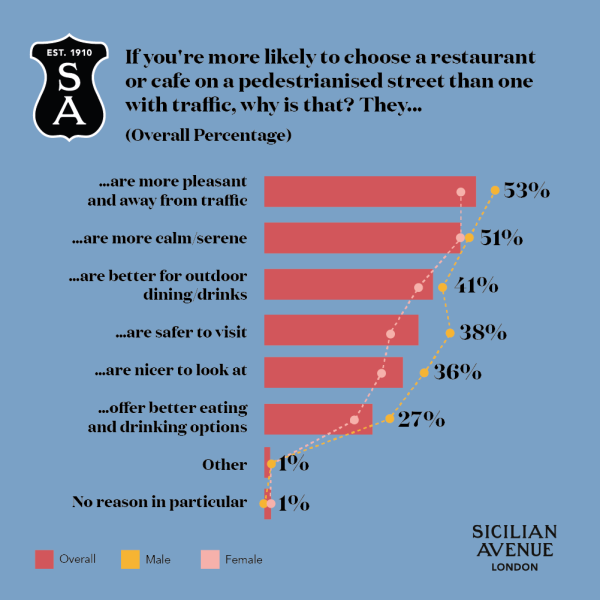 Sicilian Avenue Graph - If you’re more likely to choose a restaurant or cafe on a pedestrianised street than one with traffic, why is that? Overall
The survey found that most people visit central London with one of two things in mind - either visiting restaurants (39%) or shopping (37%).
Early trials for the ambitious plan to pedestrianise Oxford Street have also shown that car-free streets can deliver financially for retailers, and the plan has been welcomed by big businesses including Selfridges, John Lewis and IKEA. Seven out of ten Londoners support Mayor Sadiq Khan's plan to pedestrianise Oxford Street, almost a mile of road in total, which planners believe will boost local businesses, attract visitors and create jobs.
A recent trial of part-pedestrianisation on Oxford Street saw one business report a 45% increase in footfall, based on footage from security cameras on the day of a trial period. Data from the New West End Company (NWEC) found that more than two thirds of stores reported higher sales during the event, with 83% of stores saying they would take part in similar events in future. Previous TfL research showed that pedestrianisation leads to increased footfall and a 17% decline in retail vacancy, and that people who walk and use public transport spend 40% more in shops than car drivers. The vision of Sicilian Avenue is a vision of London’s future.