Could a Sicilian-inspired arch, complete with gilded lettering and classically inspired columns on a diagonal street in Bloomsbury be a vision of the future of London? Sicilian Avenue is a beloved feature of the area, set to reopen as a socialising and dining destination in the near future, but the rebirth of this quirky Sicilian-inspired pedestrian street might mark the start of a new chapter in London’s urban planning.
The relaunch of Sicilian Avenue comes as the whole surrounding area is transforming, with Camden Council's Holborn Liveable Neighbourhood set to prioritise pedestrians and cycles, and reduce pollution, with changes afoot in the streets around the British Museum near Sicilian Avenue and a new traffic-free environment planned, alongside new green and accessible public spaces and segregated cycle lanes. Sicilian Avenue was a car-free breath of fresh air in the 20th century: now it seems like a far-sighted vision of the 21st.
How Sicilian Avenue Was A Vision of the Future
It's just part of a wider shift in the area's urban planning, with the planned pedestrianisation of Oxford Street unfolding alongside other programmes such as the Pedestrian Priority Streets Programme, which aims to provide improved pedestrianisation in the City, with more room for people on foot, improving air quality and helping to reduce carbon emissions.
Sicilian Avenue was first unveiled in 1910, amid the earliest throes of car fever in London. As a diagonal car-free arcade, it was an oddity in the London of the time, when the motor car was moving from being a luxurious symbol of wealth towards being the default mode of transport. Today, that oddity seems visionary. There is broad agreement across generations that pedestrianised streets are more pleasant: 59% of those who choose a restaurant on a pedestrianised street say that it is more pleasant away from traffic (rising from 49% among Generation Z to 83% among Boomers), according to research by Sicilian Avenue. More than half (56%) say that they opt for pedestrianised eating places due to their being more 'calm and serene', a sentiment which would no doubt have been echoed by shoppers on Sicilian Avenue in the early years of the 20th Century.
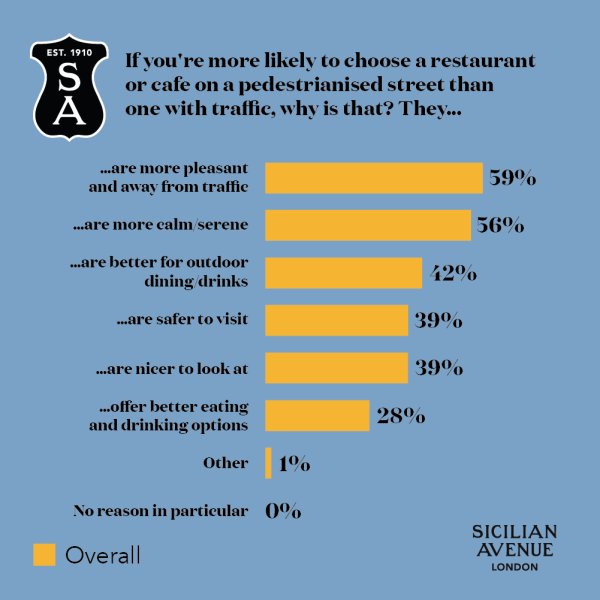 Sicilian Avenue Research Graph - If you're more likely to choose a restaurant or cafe on a pedestrianised street than one with traffic, why is that? Overall UK Residents
As one of London's earliest purpose-built pedestrianised streets, Sicilian Avenue, was part of an early 20th-century vision of a calmer, more serene side to the city. Today, as Sicilian Avenue prepares to reopen, it’s an iconic, historical foreshadowing of some of the biggest ideas of the coming century.